NanoChill's Revolutionary Technology
Our Technology Is Built On:
The Principles Of Radiative Cooling
Cool below the air temperature by reflecting sunlight and radiating heat into space.
The Sky Window And Thermal Emissivity.
Reflects up to 98.1% of sunlight, reducing absorbed solar heat by up to 10x compared with conventional white paints.
A Revolutionary Nanostructure:
Engineered nanostructures scatter sunlight before it becomes heat, enabling industry-leading solar reflectance in a thin, paintable coating.
The Principles Of Radiative Cooling
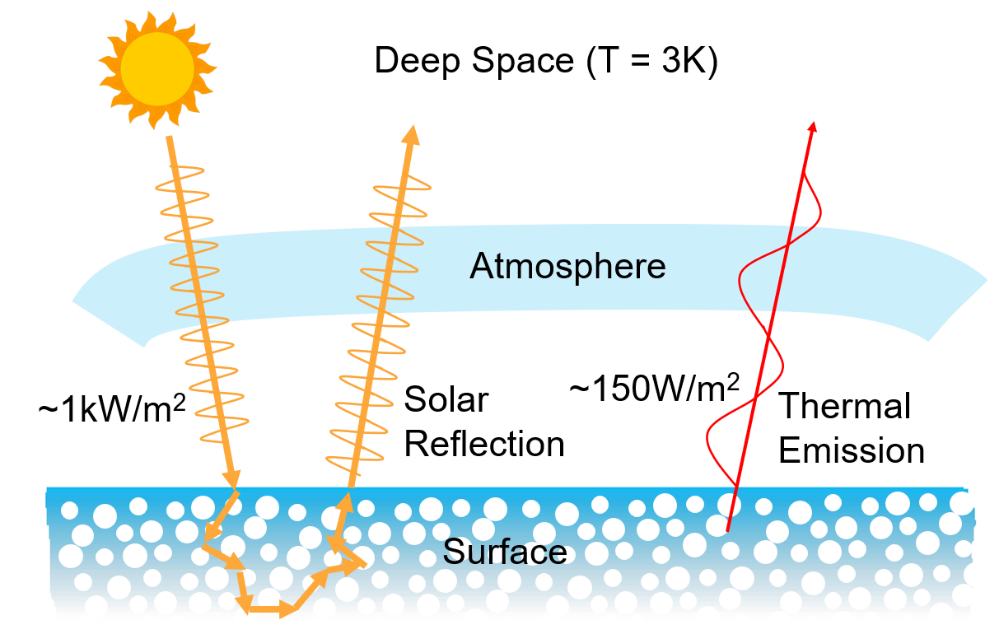
Imagine standing outside on a clear night. Even when the air feels comfortable, you may notice a chill that seems stronger than expected. That's because your body, along with the ground and surrounding objects, is continuously radiating heat toward the night sky. The sky acts as a vast heat sink, allowing thermal energy to escape into space. This natural process is known as radiative cooling, and it occurs continuously on every surface on Earth, day, and night.
The challenge has always been making radiative cooling work during the daytime.
Under direct sunlight, a surface receives far more energy from the sun than it can naturally radiate away. As a result, even conventional white surfaces absorb enough solar energy to become warmer than the surrounding air. To achieve cooling below ambient temperature in broad daylight, a material must accomplish two goals simultaneously:
1. Reflect Nearly All Incoming Sunlight
The material must reflect almost all the sun's energy across the solar spectrum, minimizing the amount of energy absorbed and converted into heat.
2. Efficiently Emit Heat to Outer Space
The material must strongly emit thermal radiation at the specific infrared wavelengths that can pass through Earth's atmosphere and escape directly into space. Emitting heat at other wavelengths is far less effective because that energy is absorbed by atmospheric gases, clouds, and water vapor and can be re-radiated back toward the surface.
The balance between these two processes determines a surface's temperature:
- If a surface absorbs more solar energy than it emits, it heats up and becomes warmer than the surrounding air.
- If a surface absorbs less energy than it emits, it cools down and can become cooler than the surrounding air.
When this balance favors heat loss, the surface achieves passive radiative cooling, reducing temperature without consuming any electricity or requiring mechanical refrigeration.
In essence, radiative cooling allows a surface to reject heat directly to the coldness of outer space, providing a sustainable pathway to lower temperatures, reduced energy consumption, and cooler buildings, vehicles, and infrastructure.
Ultrahigh Reflection of Sunlight
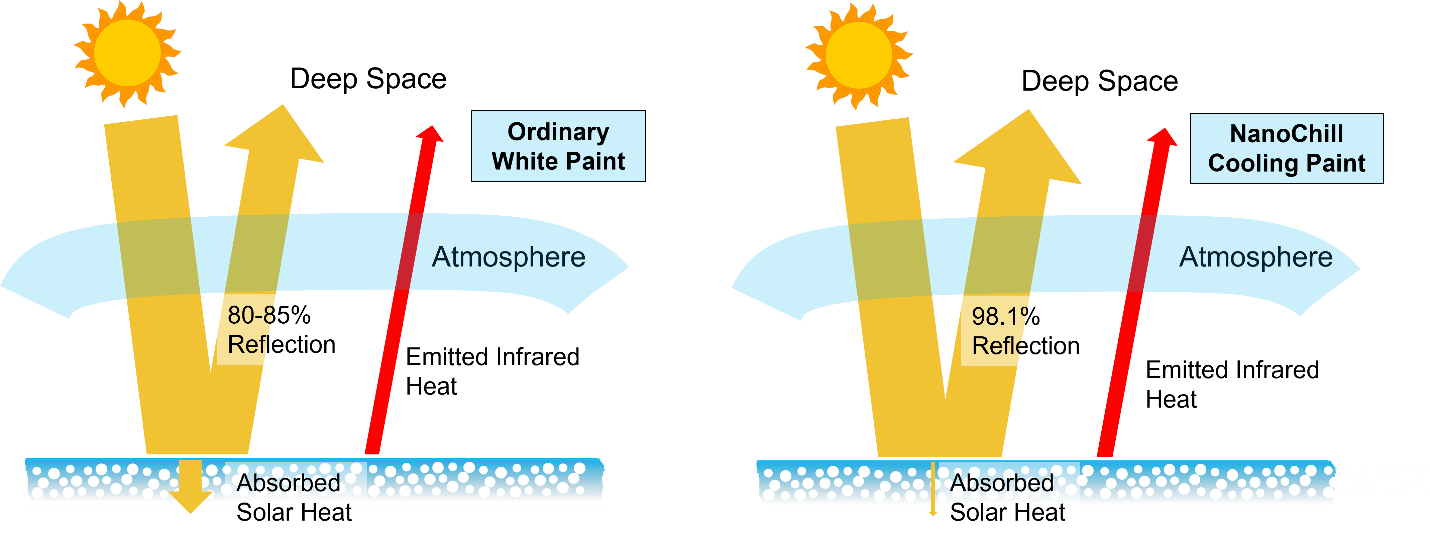
Traditional white paints on the market typically reflect only 80% to 85% of incoming sunlight. As a result, they absorb the remaining 15% to 20% of solar energy, causing surfaces to heat up under the sun and preventing them from cooling below the ambient air temperature.
NanoChill's groundbreaking cooling paints, originally developed through research at Purdue University, take a fundamentally different approach. Our coatings reflect up to 98.1% of sunlight, absorbing as little as 1.9% of incoming solar energy. This reduces the amount of absorbed solar heat by a factor of 8 to 10 times compared with conventional white paints.
Why Conventional Paints Fall Short? Most commercial white paints rely on titanium dioxide (TiO2) as their primary pigment. While titanium dioxide is highly reflective in the visible spectrum, its electronic structure makes it absorb the ultraviolet energy present in sunlight. That absorbed energy is converted directly into heat, contributing to surface warming.
A New Class of Cooling Pigments. NanoChill's paints utilize novel pigments including barium sulfate (BaSO4) and hexagonal boron nitride (h-BN). These materials possess significantly larger bandgaps, enabling them to reflect sunlight across a broader range of wavelengths while absorbing virtually no ultraviolet radiation.
The Net Effect. The difference between ordinary paints and NanoChill's radiative cooling coatings is more than incremental; it fundamentally changes the thermal balance of the surface.
Conventional paints absorb more solar energy than they can release through thermal radiation, causing surfaces to become hotter than the surrounding air. NanoChill's coatings, by contrast, absorb so little solar energy that their thermal emission can exceed their solar heat gain, enabling continuous cooling even under direct sunlight.
This allows coated surfaces to maintain temperatures below ambient air temperature throughout the day, rather than only after sunset.
Field tests of the barium sulfate-based radiative cooling coatings developed at Purdue University, which form the foundation of NanoChill's core IP, have demonstrated surface temperatures approximately 5 °C below ambient air temperature at solar noon, when sunlight is at its most intense.
In essence, NanoChill's technology transforms a painted surface from a passive absorber of heat into an active radiator of heat to space, delivering continuous daytime cooling without consuming a single watt of electricity.
A Revolutionary Nanostructure:
Achieving exceptional radiative cooling requires more than a highly reflective pigment. It requires engineering how light interacts with the coating at the nanoscale.
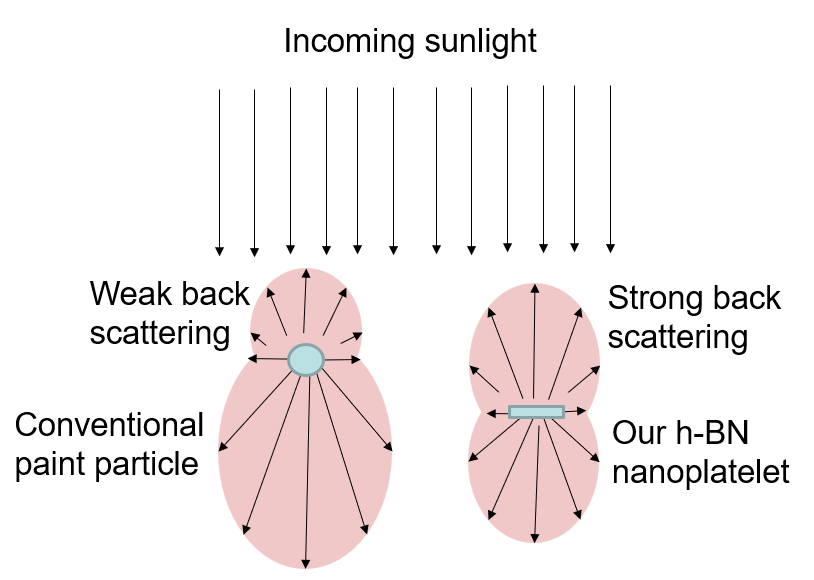
NanoChill's pigments, particle geometries, and coating architectures are designed so that incoming sunlight is scattered repeatedly before it can be absorbed as heat. A dense network of particle-binder and particle-air interfaces redirects solar energy back into the atmosphere, maximizing reflection and minimizing heat gain.
Particle Size and Shape. NanoChill's pigment particles are engineered with dimensions comparable to the wavelengths of sunlight, where scattering is strongest. In addition, the nanoplatelet geometry of hexagonal boron nitride (h-BN) creates more scattering events within the coating, further enhancing reflectivity.
Learn more in our peer-reviewed published research.
Optimized Porosity. Microscopic air spaces between particles create strong refractive-index contrasts that enhance light scattering. Too little porosity allows light to penetrate deeper into the coating, while too much can reduce durability. NanoChill carefully balances both to maximize performance and longevity.
Learn more in our peer-reviewed published research
Thin, Paintable Coatings. High reflectance requires enough scattering layers to return nearly all incoming sunlight, while remaining practical to apply like a conventional paint. NanoChill's h-BN formulation achieves 97.9% solar reflectance at only 150 microns thickness, delivering outstanding performance in a thin, easy-to-apply coating.
Learn more in our peer-reviewed published research
By combining advanced pigments with precisely engineered nanostructures, NanoChill transforms an ordinary painted surface into a passive cooling system that delivers measurable temperature reductions without consuming any electricity.
Energy Savings:
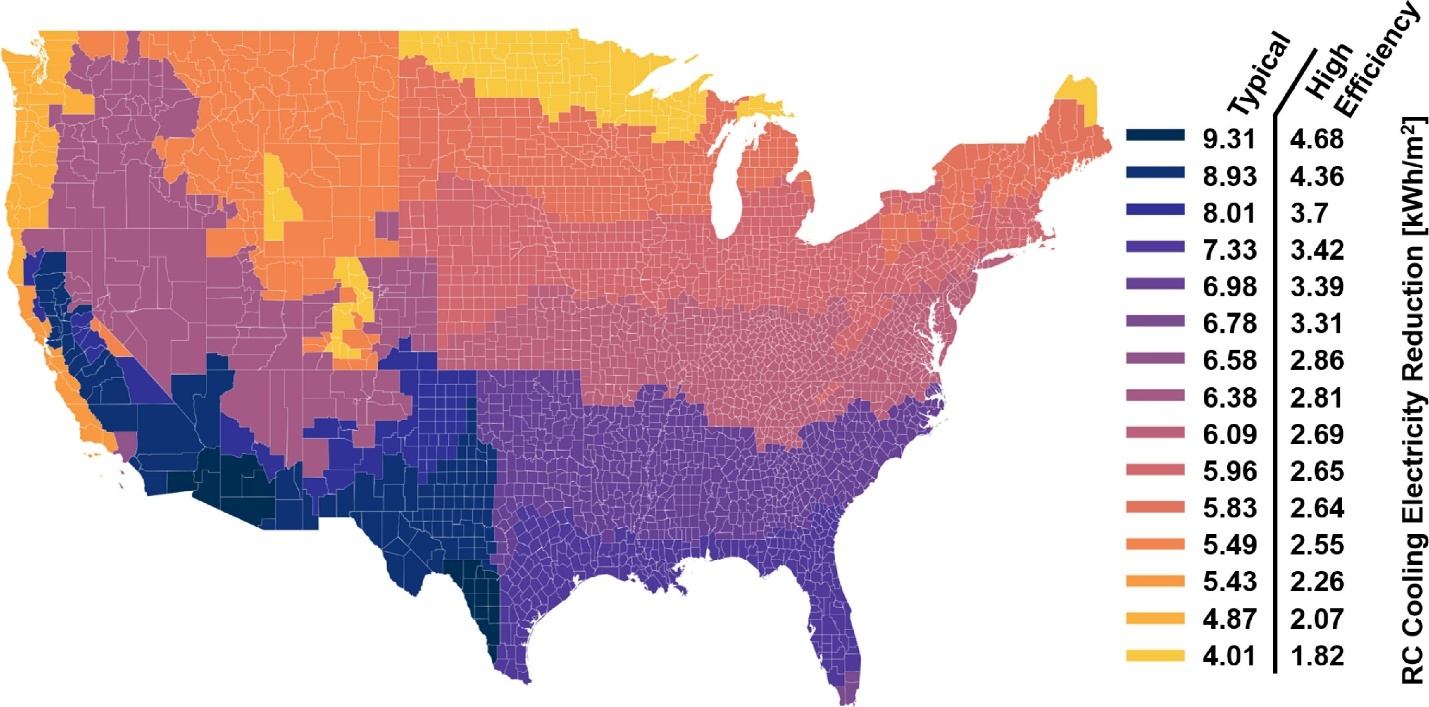
Our team has worked extensively on the potential impact of this paint, including energy savings for building owners. Previous research has shown as much as 46% savings on cooling costs for residential building owners, and 25% savings for commercial warehouse owners. This can lead to a payback period of as little as one summer.
Learn more in our peer-reviewed published research
Features:
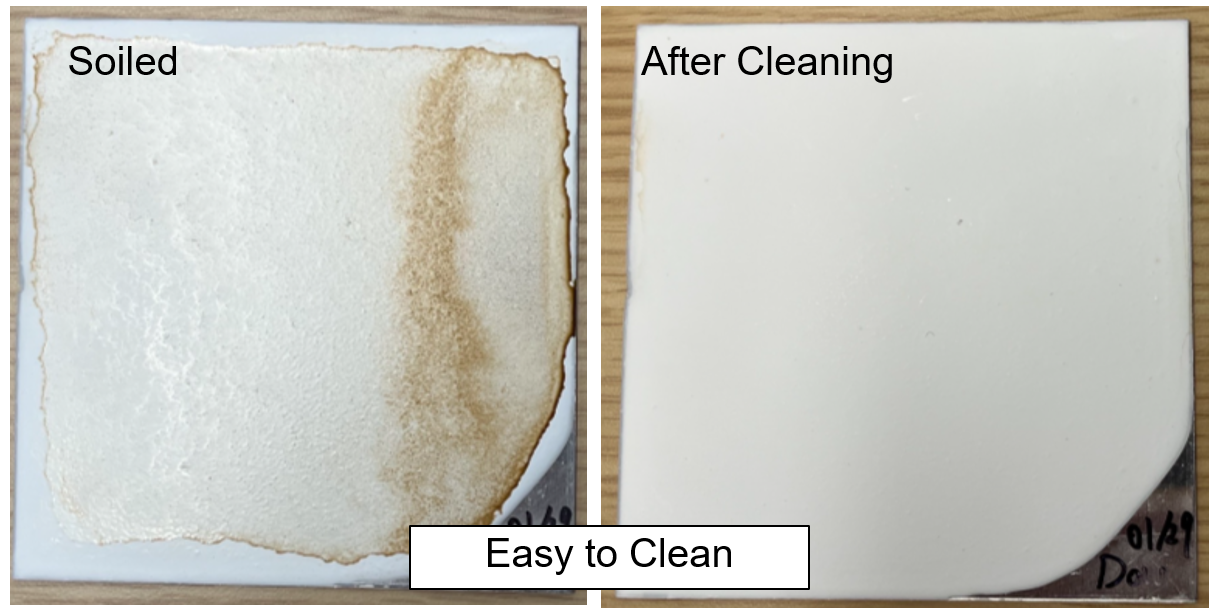
Easy to Clean